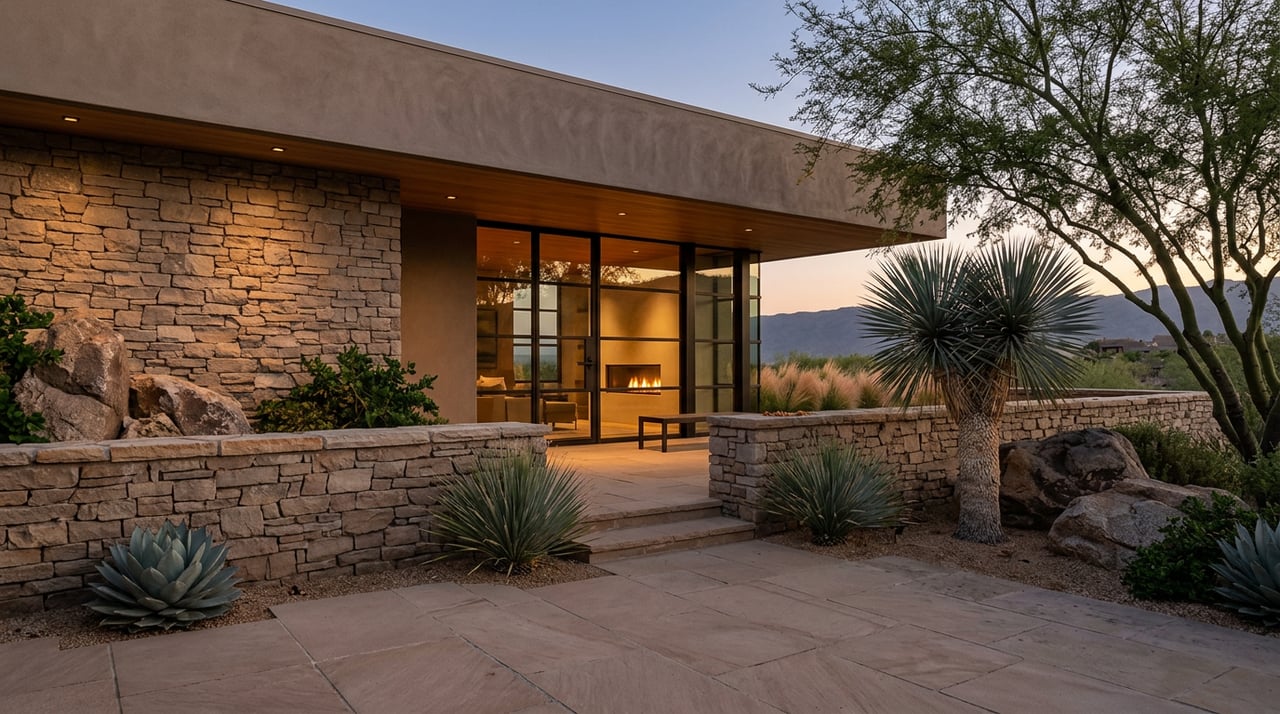
By six o'clock on a late August evening, the light on a patio in Apache Peak has already turned the color of weak tea, and the air has done something the valley floor won't manage for another hour. Residents here have learned not to trust the thermometer readings coming out of Scottsdale proper. Their own evening starts earlier, and it isn't a trick of the imagination. It's a function of where the village actually sits.
Apache Peak occupies the highest ground in Desert Mountain, nestled against the Continental Mountains at an elevation most of the community can't claim. That positioning does more than deliver the long views toward Pinnacle Peak, Four Peaks and Camelback Mountain that show up in every description of the village. It changes the schedule.
The Village At The Top
Desert Mountain's highest villages sit near 3,350 feet, among the highest residential elevations in Maricopa County, and that height is the reason summer evenings here feel noticeably cooler than they do in downtown Scottsdale or Phoenix. Apache Peak, described consistently as positioned high above the desert floor and above most of the rest of the community, is part of that upper band.
The Sonoran Desert already does a version of this trick on its own. Low humidity means the afternoon heat doesn't linger the way it does in wetter climates, and a 30-degree swing between the day's high and the following morning's low isn't unusual anywhere in the Valley during summer and early fall. Add elevation on top of that pattern and the swing starts sooner. Down in Scottsdale, late September afternoons still commonly push into the upper 90s, with evening lows only easing into the low 70s. Up in Apache Peak, that same relief tends to arrive earlier in the afternoon and settle in deeper once the sun drops behind the Continental range.
That's the part of Apache Peak life that doesn't show up in a listing photo. It's a couple of degrees and a couple of extra minutes of usable daylight, and it rearranges when the whole village actually goes outside.
Another 750 Feet, Off Your Own Trailhead
Here's the detail that most descriptions of Apache Peak skip past. The village already sits on Desert Mountain's high ground, but the private trail system bordering it climbs further still. Desert Mountain's trail network follows the eastern slope of the Continental Mountains up to a 4,100-foot summit that looks out over landmarks including Skull Mesa, all without a member ever leaving the club's own gates.
Set that summit against the village's own elevation and the math is straightforward: roughly 750 additional feet of climb sits between an Apache Peak front door and the top of the trail system that runs behind it. That's not a decorative number. It's the reason a hike that starts from this particular village behaves differently than one that starts almost anywhere else in the community. The air keeps thinning and cooling as the trail climbs, which means the window for a genuinely comfortable evening walk opens earlier here and stays open longer than it does for neighbors starting from lower ground.
A few things worth knowing if that trail is on the evening agenda:
- The system is private to Desert Mountain members and connects directly into terrain bordering Tonto National Forest, so there's no drive required to reach a trailhead.
- The climb toward the 4,100-foot summit runs through varied desert terrain rather than a flat loop, with real elevation change built into the route.
- Dawn and dusk are the practical windows most of the year. Midday sun at this elevation doesn't forgive the way a shaded valley trail might.
None of this is a secret held by one hiking club. It's simply a fact about geography that only matters once you understand which village you're standing in when you start walking.
Downhill To Dinner
The other half of an Apache Peak evening runs downhill, literally, to the Apache Clubhouse. The building itself is a deliberate mix of architectural references, styled as a blend of traditional adobe fort and Grand Canyon lodge, and it doubles as a gallery space for the club's Native American art collection. It's not a backdrop. Members who've had a drink at the bar there will tell you the art is part of the conversation.
The Apache Grill inside specializes in steak and seafood, built around a menu of premium dry-aged beef and an extensive wine list, and it's earned a reputation as Desert Mountain's local steakhouse rather than an occasional-use dining room. All ten of the club's restaurants and grills report to Culinary Director Chef Bertrand Bouquin, a French-born chef who holds the distinction of Maître Cuisinier de France, one of the field's more demanding professional honors. The adjoining piano bar and lounge runs live entertainment every night, which is a specific enough detail that it explains why so many Apache Peak evenings end there rather than at home.
Put the two halves together and the shape of the evening becomes clear. The cooling starts earlier because of elevation. The trail opens earlier because it climbs another 750 feet above an already-high village. And the walk or short cart ride down to the clubhouse becomes the natural second half of the night once the light starts to go, not a separate outing planned days in advance.
The Course Plays Into It Too
The golf itself follows the same rhythm. The Apache Course, designed by Jack Nicklaus as a links-style layout through gentler desert terrain, is flatter and more walkable than several of Desert Mountain's other six courses, which is part of why it's popular with members who want a relaxed evening round rather than a five-hour test. Its most talked-about hole is the eighteenth, built with two separate greens in the old Scottish tradition, where the entire putting surface isn't visible from the fairway until a player is already committed to the shot. It's the kind of detail that gets repeated over drinks at the clubhouse bar precisely because it's specific to this course and this village, not a generic golf story that could belong anywhere.
An early evening round on a course built for walking, finishing at a clubhouse with a nightly piano bar and a chef trained to the highest level of French culinary certification, isn't a coincidence of amenities stacked next to each other. It's what happens when a village already sits above the rest of the community and gets an extra 750 feet of private trail on top of that.
What This Actually Means Day To Day
None of this requires a special occasion. It's simply the built-in schedule of living at Apache Peak's elevation, a schedule shaped by geography as much as by anything the club programs on a calendar. The heat breaks sooner here. The trail stays comfortable later into the morning and opens up again earlier in the evening. And the walk down to dinner arrives at exactly the moment the light starts doing something worth watching.
If you're already living that rhythm in Apache Peak and ever want to talk through what else is happening across Desert Mountain's villages, from trail access to clubhouse changes to how the market here is actually moving, Linda Salkow has spent 29 years inside this community and is always glad to compare notes.