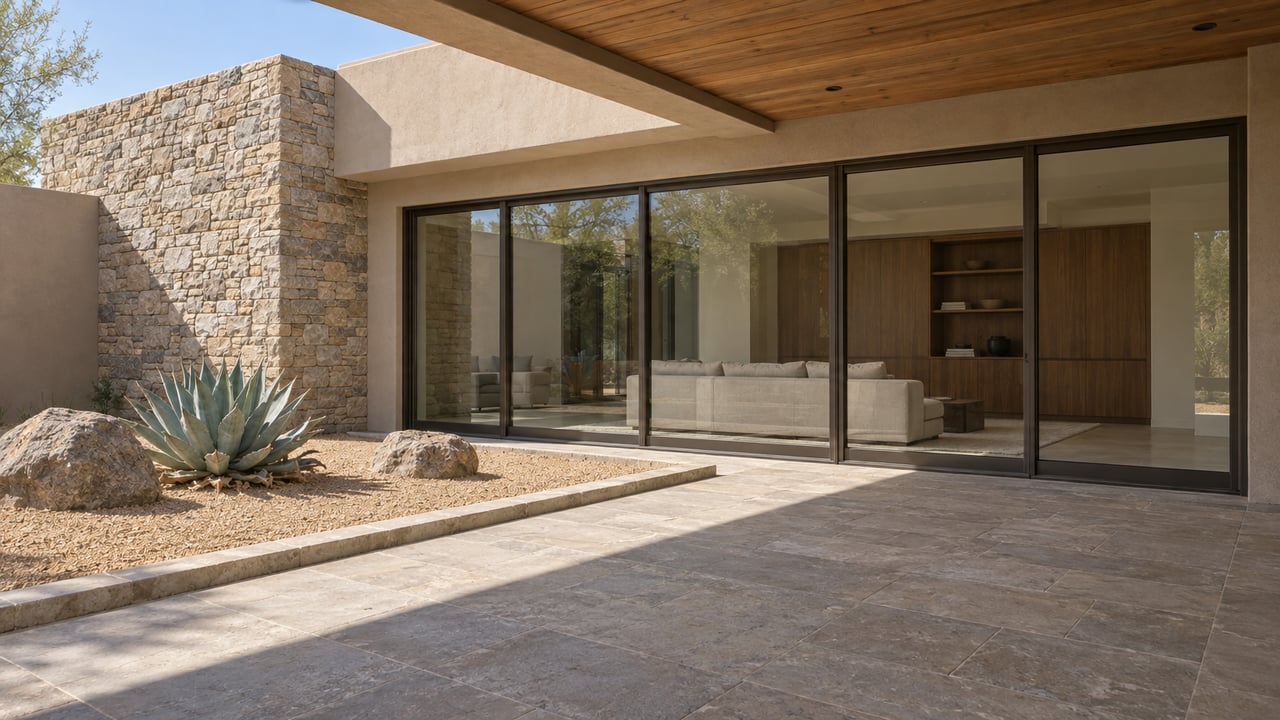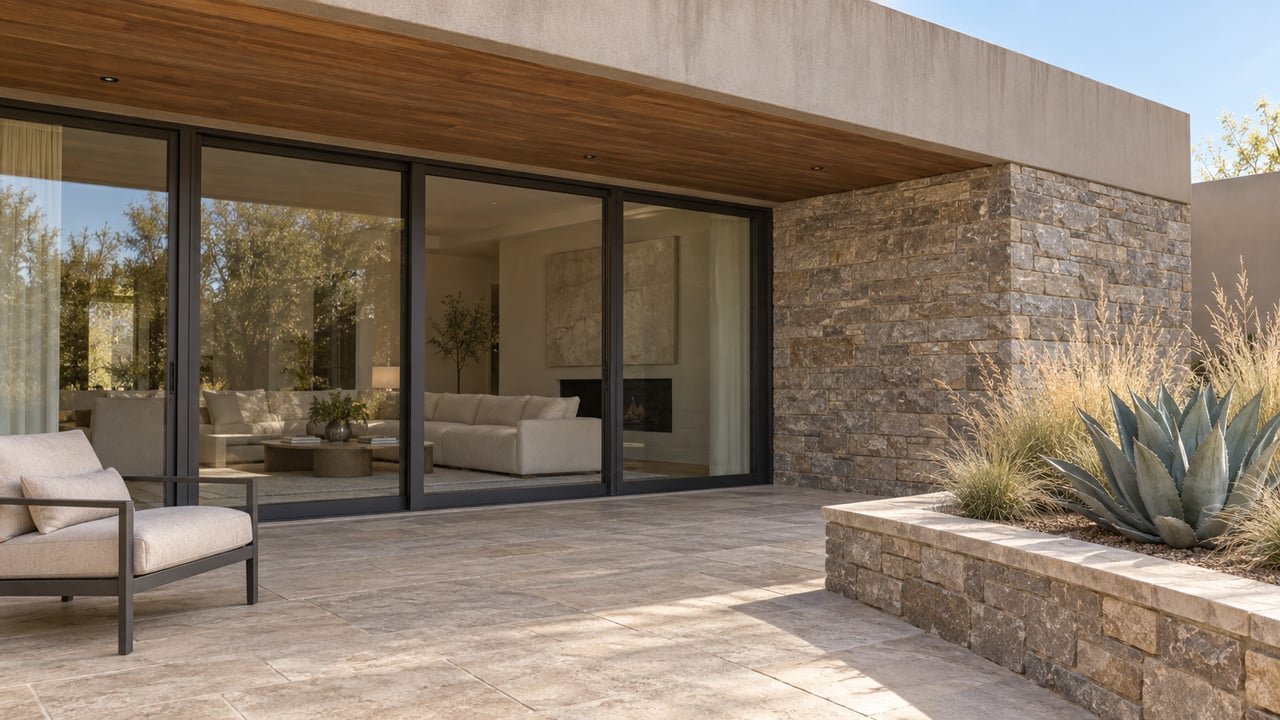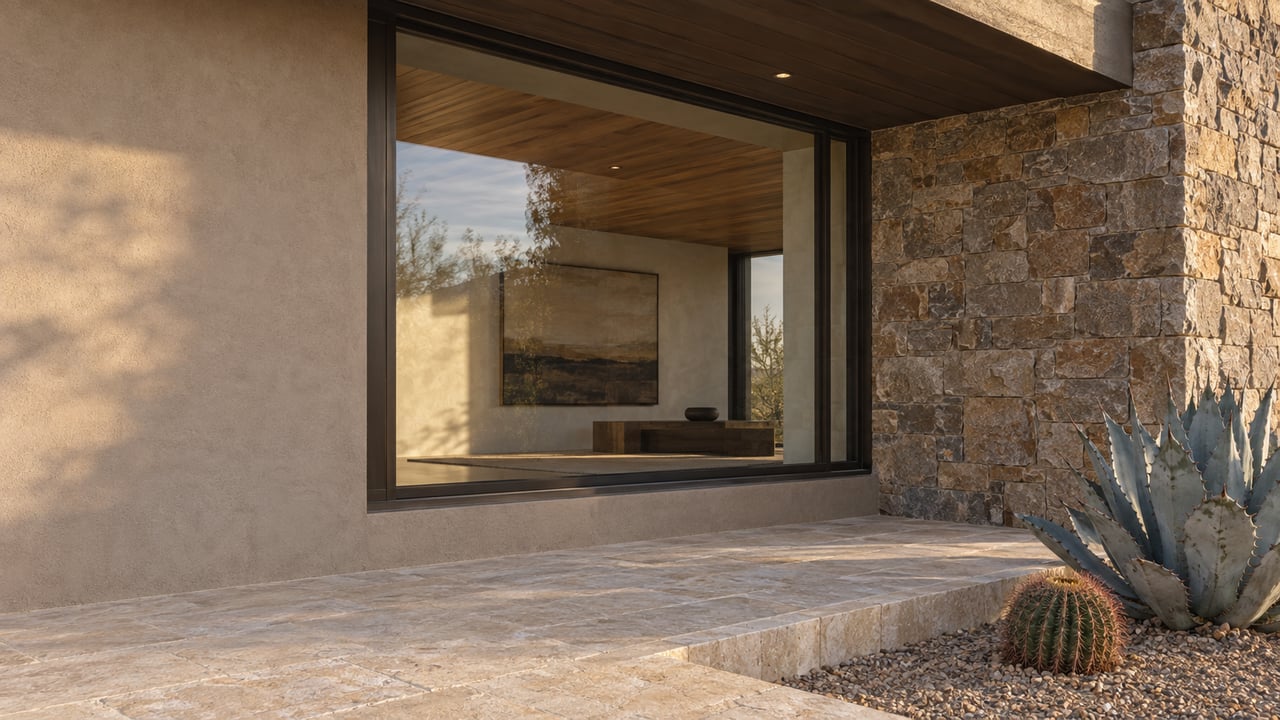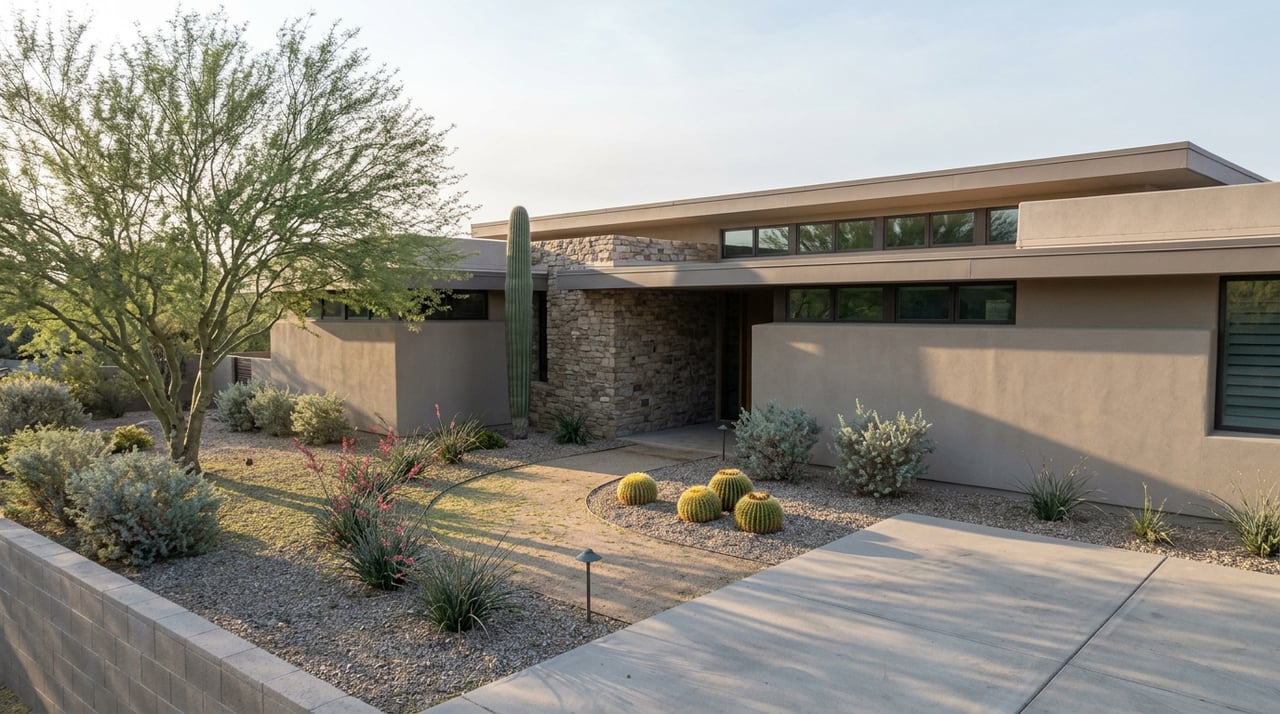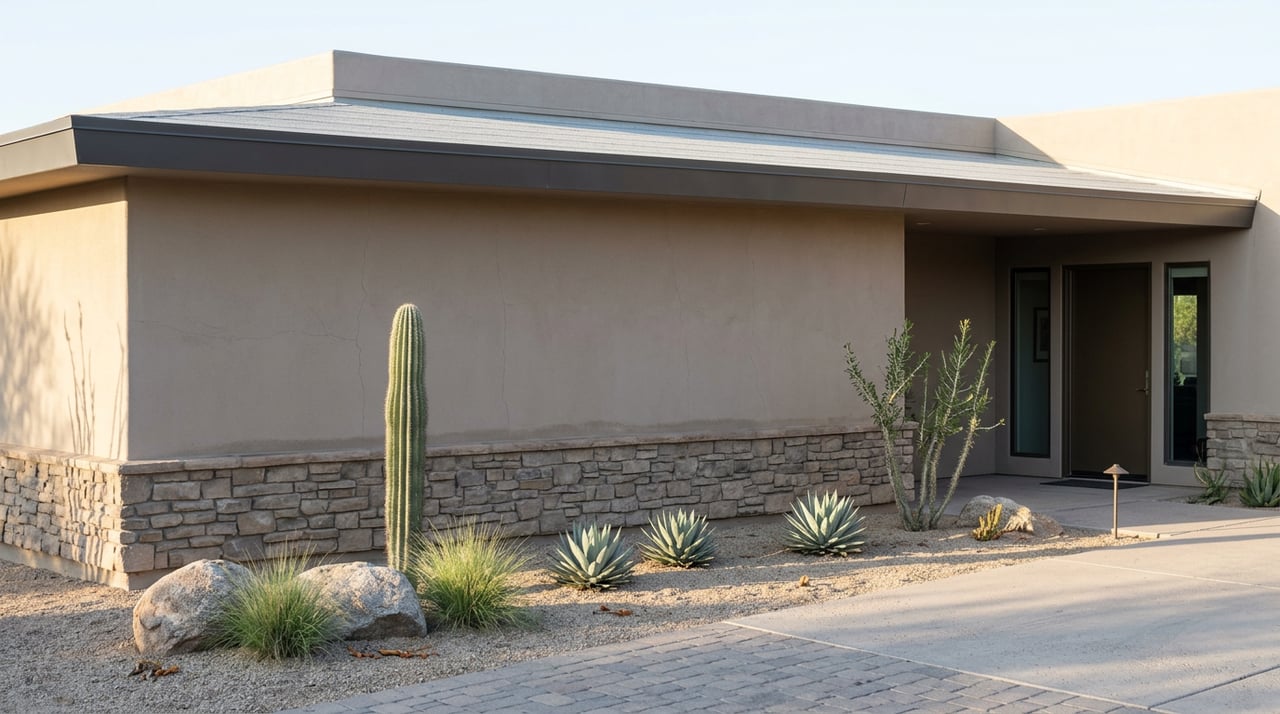
"If you're not careful, buildings can overwhelm it instantly."
That's architect Bob Bacon, talking to a Golf.com writer this spring about the Sonoran Desert and the building he designed to sit inside it. Bacon called the desert "a visually fragile environment," the kind of place where trees rarely top 20 feet and there's nowhere for a poorly considered structure to hide. His subject was the Cochise-Geronimo Clubhouse, the one Arrowhead, Chiricahua Villas, Cinterosa, Cochise Geronimo, Cochise Ridge, Lost Star, Saguaro Forest and Seven Arrows residents have walked through so many times they no longer look up at the roofline. The feature ran during the week Desert Mountain hosted the U.S. Amateur Four-Ball Championship, which meant a national golf audience got a formal introduction to a building most of Upper Villages treats like a second kitchen.
Here's what's worth sitting with. The same restraint that made an outside writer want to explain this building is the reason it works equally well for a quiet Tuesday breakfast and the club's biggest member gatherings. That wasn't an accident, and it shows up in three places that touch daily life directly: the clubhouse itself, the golf course beside it, and the sister clubhouse ten minutes away by cart.
A Building That Grows Out of the Ground Instead of Off It
Bacon's design goal, in his own words to Golf.com, was a structure that doesn't "jump out of the mountain" but "grows out of it." Walls reach into the surrounding desert and anchor the building to the earth rather than leaping up from it. That's not architecture-writer language for a pretty view. It's a specific decision about how a roofline behaves against a mountain backdrop, and it's why the Cochise-Geronimo Clubhouse reads as low and unremarkable from the villages that border it directly.
The building blends Frank Lloyd Wright-inspired design with historic Native American and desert influences, according to Desert Mountain's own description of the Cochise course, and it does real work behind that restraint. It houses the locker rooms and concierge offices for both the Cochise and Geronimo golf courses, a retail pro shop, and a practice facility with two dedicated short-game areas, a two-sided range, and multiple putting greens. It's also where the club hosts many of its largest member gatherings, alongside the daily rhythm of casual breakfasts and lunches at The Range House. One building, two very different paces, and neither one feels like it's borrowing space from the other.
A Building That Won't Agree on Its Own Size
Here's a detail that says more than it should. Desert Mountain's own club materials describe the Cochise-Geronimo Clubhouse as 52,000 square feet. Golf.com's 2026 feature, written after an in-person walkthrough with Bacon, puts it at 72,000 square feet. That's a 20,000-square-foot gap on a building whose entire design brief was not to be noticed.
Treat that as evidence, not error. A structure built to defer to the desert around it is genuinely hard to size up correctly, even for people whose job is measuring buildings. It doesn't announce its own scale the way a resort clubhouse with a soaring porte cochere might. It just sits there, walls reaching into the ground, doing double duty as an events venue and a neighborhood diner without ever tipping its hand about which one it's built for.
The Course Got Quieter, Not Flashier
The Cochise golf course went through its own version of this same discipline. It reopened in September 2024 after a 12-month restoration led by Nicklaus Design, and the stated goal wasn't a redesign. It was restoring the course to its original playing conditions while modernizing the entire irrigation system underneath it.
Golf Digest's own course panel confirmed the scope: new irrigation, rebuilt bunkering with improved drainage, and modifications to several holes over the 2023-24 season, with one panelist noting the course is "a shorter version of Chiricahua but with similar beauty, aesthetics and character." What's telling is what happened next in Golf Digest's Arizona rankings. Cochise sat at 22nd among the state's courses going into the restoration and came out at 24th in the 2025-26 list, two spots lower after the most extensive work the course has seen in decades.
A restoration built to chase a leaderboard ranking doesn't finish two spots down. This one wasn't optimizing for a higher number. It was preserving a course that once hosted The Tradition, the first major championship on the Senior PGA Tour, where Jack Nicklaus himself won four times as both designer and competitor. The par-3 7th and par-5 15th still share a double green on an island approached from two directions, the same signature quirk members have played around for decades. What changed was the water bill and the bunker sand, not the identity.
Ten Minutes by Cart, a Different Kind of Restraint
The Chiricahua Clubhouse sits in the northern foothills and takes the opposite approach to the same problem. Where Cochise-Geronimo disappears into flat desert massing, Chiricahua leans into a Tuscany-influenced design at roughly 22,000 square feet, built around Constantino's, a restaurant centered on Sardinian cooking and a two-story wine tower holding somewhere around 3,000 bottles. It's been recognized in Arizona Foothills magazine as one of the state's best golf club restaurants.
It's a completely different material language from the Wright-inspired clubhouse ten minutes away, and it still lands on the same underlying idea. Neither building asks you to make an occasion out of walking in. One does it by growing out of the mountain. The other does it by leaning into old-world detail so specific it stops feeling like a special-occasion room and starts feeling like a regular Thursday option.
What This Actually Means on an Ordinary Tuesday
Three different design teams, working decades apart on entirely different buildings, landed on the same rule without coordinating on it: nothing here is supposed to put you on stage. Bacon's clubhouse grows out of the earth instead of standing up against it. Nicklaus Design's restoration crew rebuilt Cochise's irrigation and bunkers without touching what made the course itself recognizable. Chiricahua's Tuscan detailing gives Constantino's its own identity without competing with the clubhouse next door for attention.
That's the actual reason a member can eat eggs at The Range House on Monday, sit through a themed dinner in the main dining room on Thursday, and split a bottle from a 3,000-bottle wine tower ten minutes away on Saturday, without any single one of those evenings registering as a special trip. Desert Mountain currently ranks #8 among Platinum Clubs of America and holds the top spot in Arizona's country club category. That recognition didn't happen despite the restraint built into these buildings and this course. It happened because of it.
If you're curious what village life actually looks like day to day around Cochise Geronimo, Cochise Ridge, or any of the other Upper Villages neighborhoods, or you'd like a current sense of what a home here is worth, Linda Salkow at DesertMountainHomes.com has spent 29 years inside this community and is glad to talk through the details that don't show up on a listing sheet.