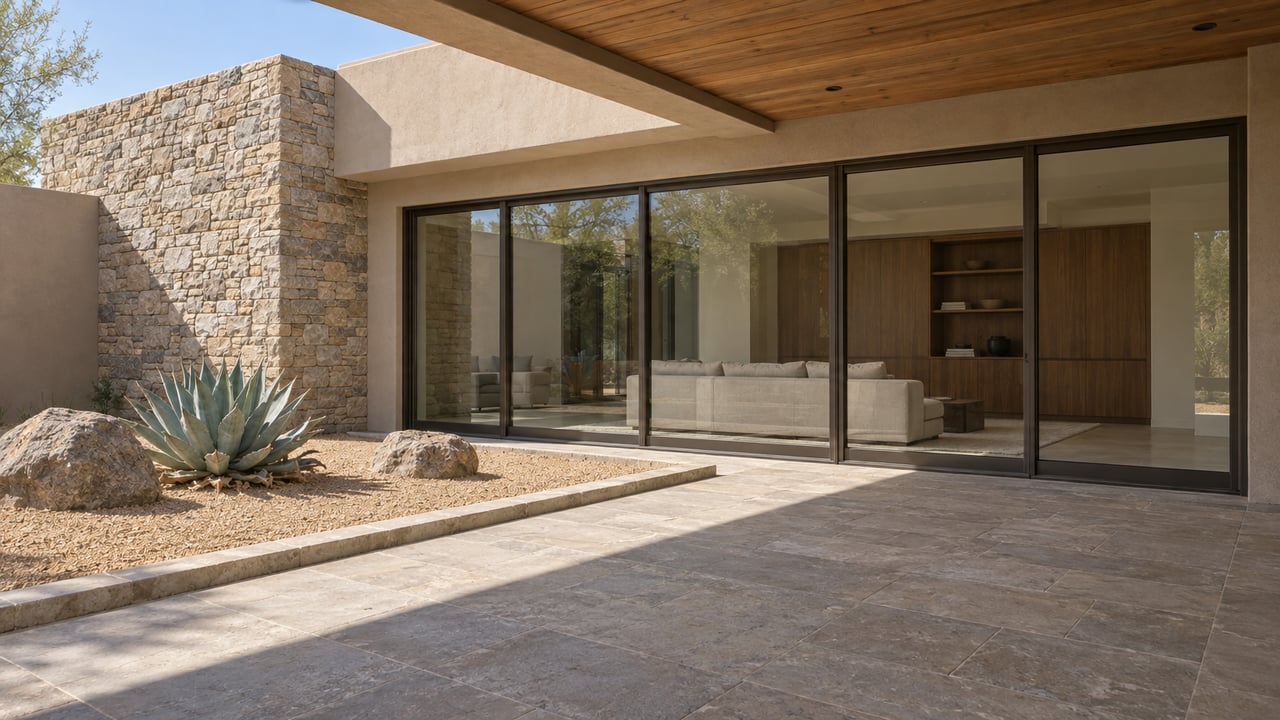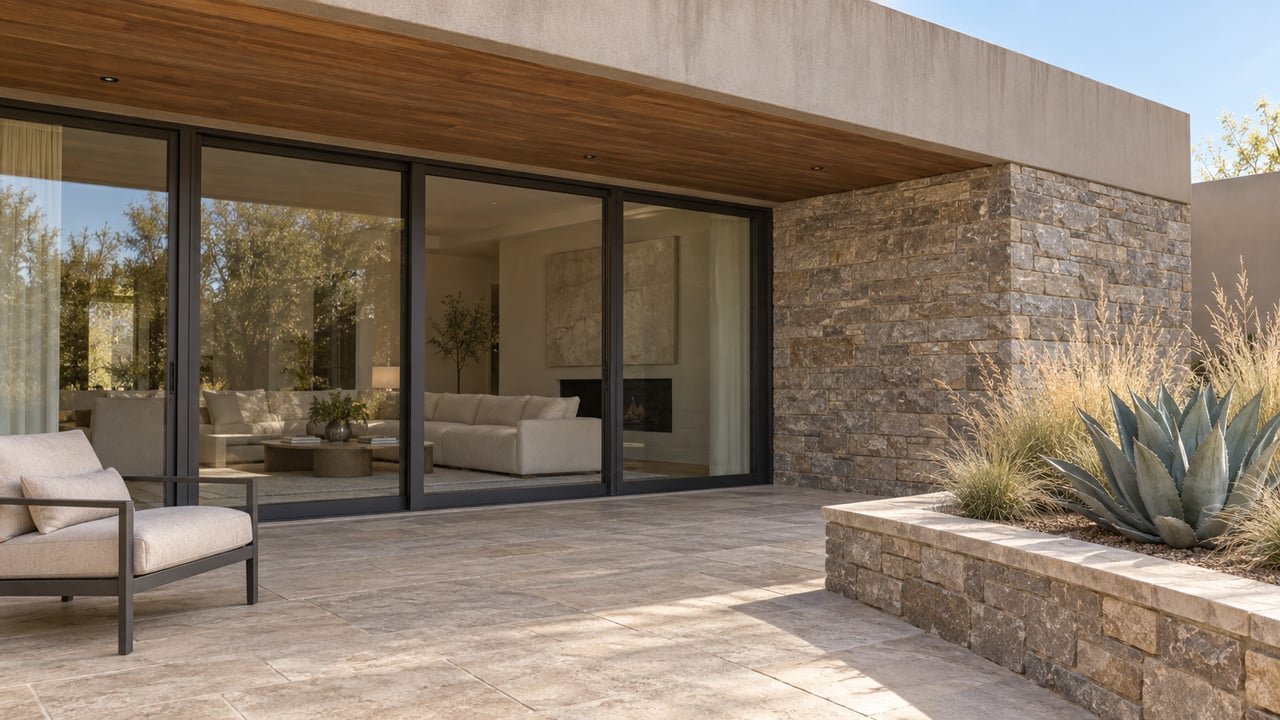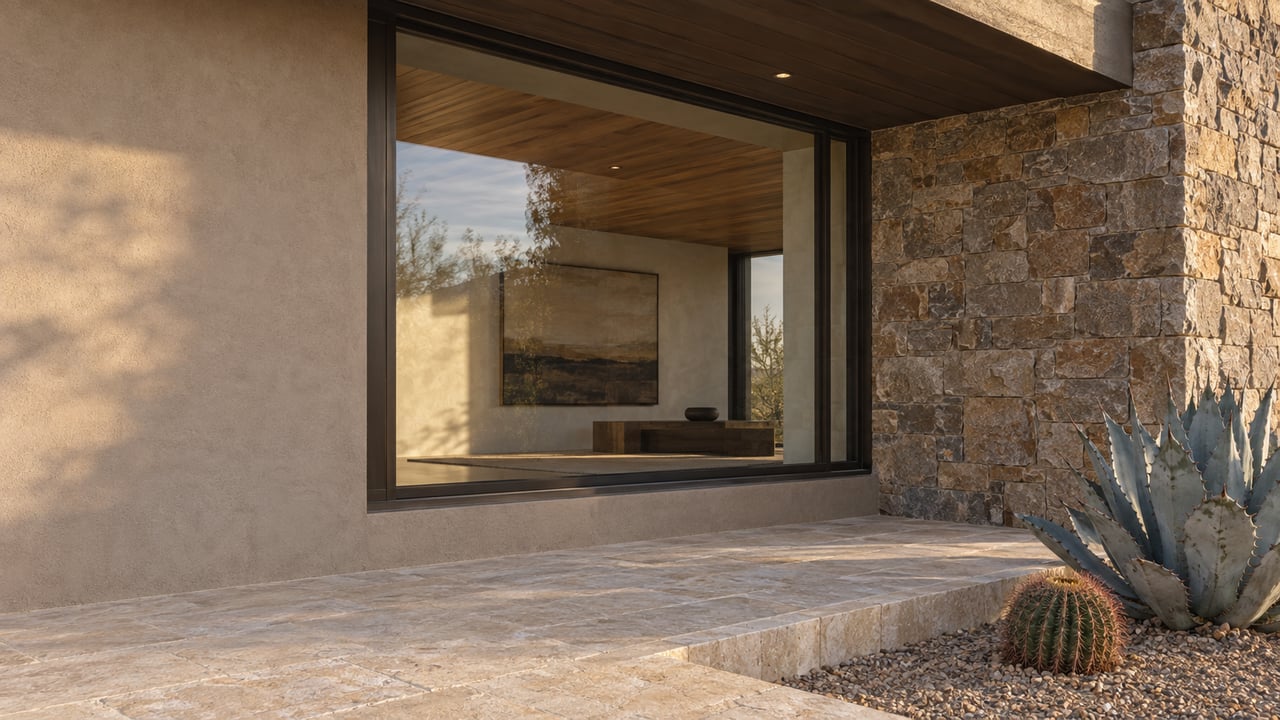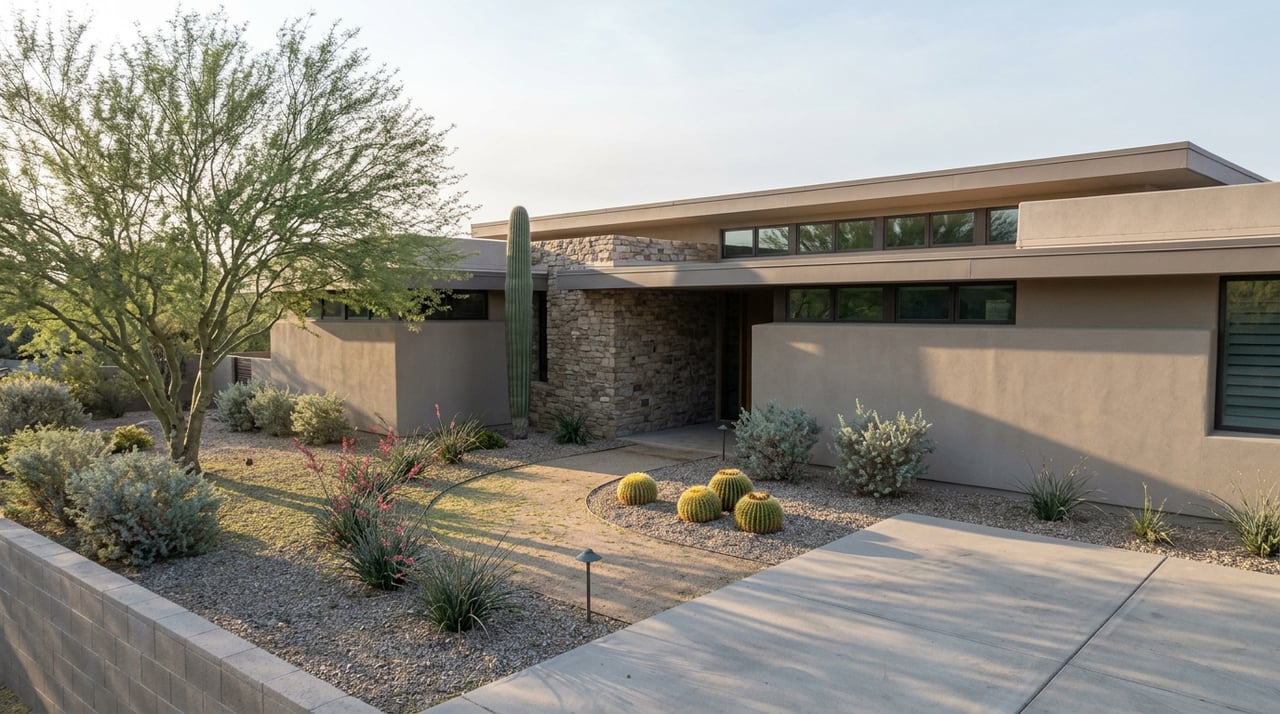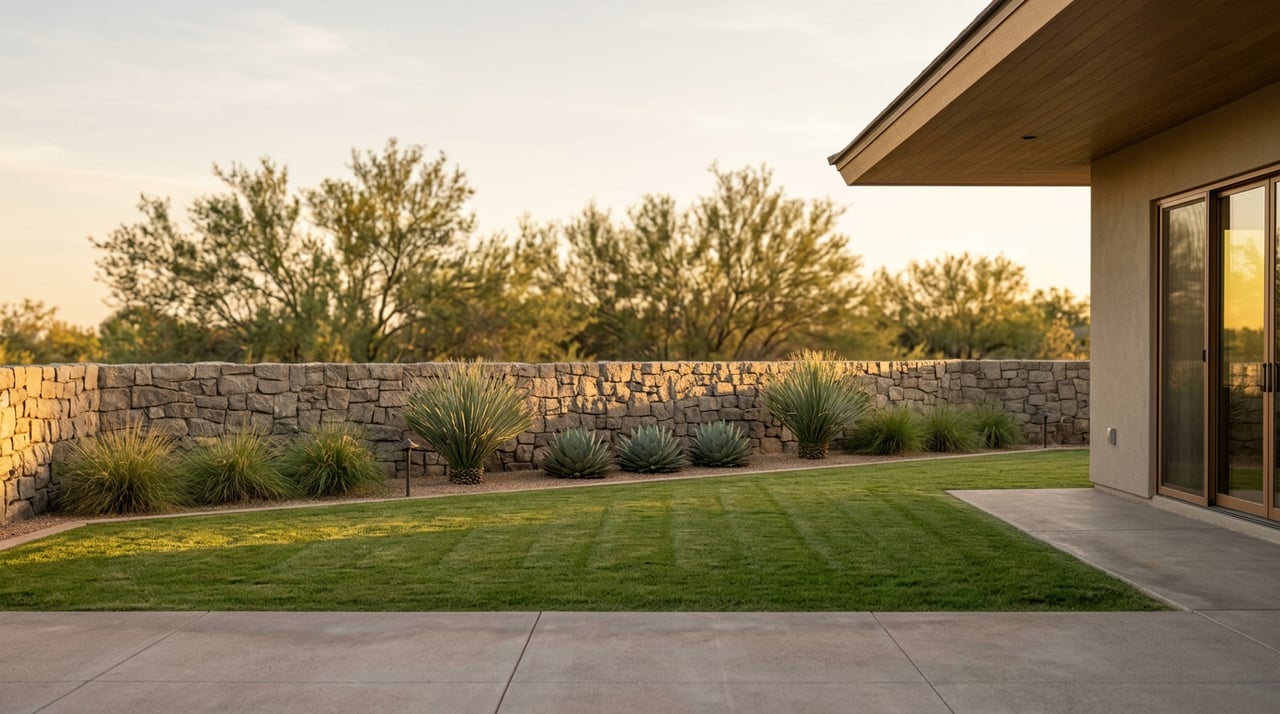
By 6:30 on an August evening, the light over Desert Greens turns the kind of amber that makes even a routine walk feel like an event. The monsoon clouds that built up over the ridge all afternoon are starting to break apart, the heat index has finally dropped out of triple digits, and somewhere out past the casita roofline, a golf cart hums along a cart path instead of a fairway. This is the hour Desert Greens residents have been waiting for since about 2pm. It's also an hour when the character of this particular village becomes especially apparent.
Desert Greens sits directly on the Apache Golf Course, and Apache is not built like the rest of Desert Mountain. The Apache Golf Course is more forgiving than some of Desert Mountain's other courses, flatter and walkable, designed with wider fairways for a less punishing but still engaging round. That flatter, more walkable layout helps explain why evenings here look different than they do two villages over.
The Course That Doesn't Climb
Desert Mountain offers a range of settings, from elevated terrain and ravines to broad views. Apache brings a different landscape to this corner of the property.
The Chiricahua course, at 7,424 yards, is dramatically elevated above the other Desert Mountain courses and provides some of the best views within the community. Geronimo is considered one of the most visually intimidating courses at the club, with significant elevation changes, deep ravines, broad fairways, and dramatic plateaus. Renegade, the original course, offers a different kind of challenge: golfers there choose from fourteen different tee-to-green combinations on every hole, creating a rewarding round with plenty of options.
Apache breaks that pattern. Many homeowners choose to live near the Apache Golf Course specifically because of its peaceful setting, with a more open layout that appeals to people who love golf but also value quiet surroundings and scenic views. The difference shows up in small ways. Neighbors on Chiricahua or Geronimo tend to golf and then drive somewhere for their evening walk. Neighbors in Desert Greens can do both on the same stretch of ground, because the terrain here makes it easy to keep walking at a casual pace.
That geography, more than any amenity list, is the actual argument for what daily life feels like here in August, when a flat quarter mile matters more than a scenic overlook you'd need air conditioning to enjoy.
Where the Walk Ends
The loop around Apache has a natural stopping point, and it's not subtle. The Apache Clubhouse blends traditional adobe fort architecture with a Grand Canyon lodge feel, and doubles as gallery space for the club's extensive collection of Native American art. At 17,000 square feet, with another 6,000 square feet of covered patio, it's sized for exactly the kind of unhurried evening a walkable course invites.
The Apache restaurant specializes in steak and seafood, and the adjoining piano bar and lounge is a member favorite that offers live entertainment every night. That last detail is worth sitting with. A lot of private clubs treat live music as a special-occasion booking. At Apache, it's the default, which means the reward at the end of a Tuesday evening walk isn't meaningfully different from the reward at the end of a Saturday one. For a village where the course itself is designed around consistency rather than spectacle, that nightly rhythm fits.
What's Different Beyond the Walk
The clubhouse routine hasn't stayed static, and a few additions from the past year or so are worth knowing about if you haven't ranged far from your own street lately.
The Hideout at Renegade has reopened after a full renovation and is back to serving its traditional menu for breakfast, lunch, sunset cocktails, and dinner. It's a short cart ride from Desert Greens, and it gives residents a second dinner option beyond Apache without leaving the club. Every kitchen across the property, including Apache's, answers to the same person: Chef Bertrand Bouquin, the club's Culinary Director, holds the distinction of Maître Cuisinier de France, one of the highest honors in the profession. That continuity is part of why swapping clubhouses for dinner doesn't feel like leaving home.
For a lighter night, the club's own food truck, driven by the Mountain Chef, makes its regular appearances at Food Truck Fridays on the practice ranges and around the clubhouses. And for members looking for something more active than a walk, the Sonoran Fitness and Spa facility added eight dedicated pickleball courts, part of a club-wide investment in racquet sports that also includes nine tennis courts across multiple surfaces and 25 miles of private hiking trails.
| Where | What's there now | Distance from Desert Greens |
|---|---|---|
| Apache Clubhouse | Nightly piano bar, steak and seafood dining | On the course, walkable |
| The Hideout at Renegade | Reopened after full renovation, all-day menu | Short cart ride |
| Practice ranges | Weekly Food Truck Fridays with the Mountain Chef | Cart ride |
| Sonoran Clubhouse | Eight pickleball courts | Cart or short drive |
None of this changes the fundamental math of living on Apache. It just means the walk has more places to end than it used to.
Past the Gate
Some evenings call for leaving the club entirely, and Cave Creek gave Desert Greens residents a new reason to do that this month. According to the Cave Creek Carefree Independent, Cave Creek is welcoming its newest restaurant, Creekers, this August. The team behind it is made up of Cave Creek residents with a background in hospitality, and the goal is a place that feels like it was always part of town, serving "familiar food made with care."
It's a burger-and-a-beer kind of stop, which is a different register than Apache's piano bar, and that contrast is exactly the point. A village built on one of the flatter, quieter courses in the club doesn't need every night to be a formal one. Some evenings the right move is a short drive out the gate for something unfussy, then back in time to catch the last light over the fairway.
The Pattern Underneath It
Strip away the restaurant openings and the new pickleball courts, and what's left is a simple fact about Desert Greens that doesn't show up in a listing photo. The course this village sits on has a flatter, more walkable layout, and that terrain helps shape what a Tuesday evening looks like here. The clubhouses change their menus, the club adds courts, a new burger place opens a short drive from the gate. The flat ground stays flat. For residents, that steady, walkable setting is part of what gives an ordinary evening here its distinctive rhythm.
If you're weighing a move within Desert Mountain, or just curious what a Desert Greens home is worth against today's fairway-facing inventory, Linda Salkow has spent 29 years learning which villages actually live the way their listings describe. Request a Home Valuation to start that conversation.