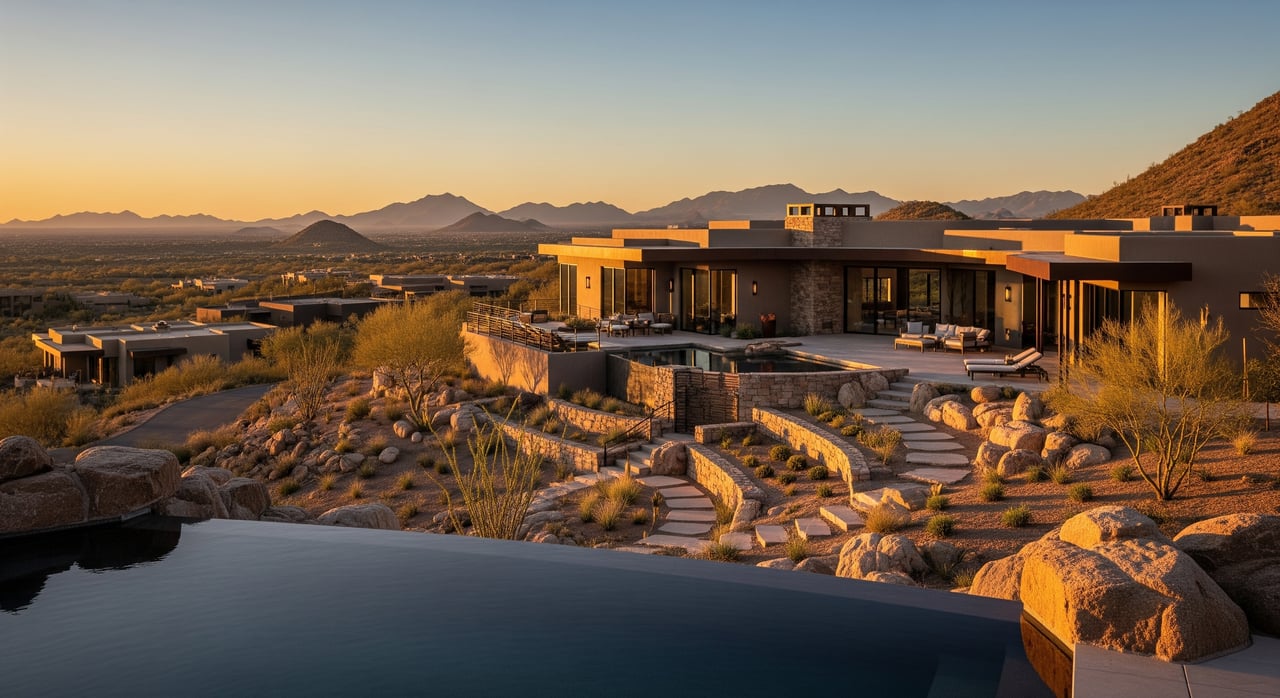
Are you weighing two Desert Mountain homes that look similar on paper but are miles apart on price? You are not alone. In Desert Fairways and nearby villages, small differences in view, elevation, and privacy can move value in a big way. In this guide, you will learn how each factor works, how the market reacts, and what to document so you can price with confidence or write a smart offer. Let’s dive in.
Why views command premiums
Not every lot enjoys the same sightlines. Panoramic mountain ranges, valley city lights, golf fairways, and protected open space are the primary view types you will see in Desert Mountain. Buyers usually pay more for unobstructed, wide views and for views that are unlikely to change. That premium reflects scarcity, day-to-day enjoyment, and long-term resale appeal.
View types that matter
- Mountain ranges: McDowell, Four Peaks, and long ridgeline vistas that frame sunsets.
- City and valley lights: twinkling evening views with dramatic sunsets.
- Golf course: fairway and green views that deliver color and motion.
- Preserved open space or canyons: natural corridors that reduce future obstruction risk.
What protects a view
Protected views are more valuable because they are less likely to be blocked. HOA and club rules, recorded easements, and topography all help. Views across preserved open space tend to be more secure than views across private parcels that could be developed. When you can document those protections, buyers respond.
Elevation and pricing
Elevation changes more than the angle of your view. Higher lots often see farther, feel a bit cooler, and are less likely to have future blockages. A typical lapse rate is about 3.5°F per 1,000 feet of gain. Elevation can also carry tradeoffs such as more wind or glare.
Physical and perceived effects
- Physical: longer sightlines, slightly cooler temps, and reduced dust or noise at times.
- Perceived: a sense of exclusivity and separation from neighborhood activity.
- Tradeoff: more exposure to wind and sun in some positions.
Elevation bands and comps
The market tends to group homes into elevation bands, not tiny foot-by-foot differences. A home that sits well above neighborhood grade often commands a premium relative to nearby lower homes. When you build a comp set, compare within similar bands so your adjustments are meaningful.
Privacy, setback, and orientation
Privacy levels can shift value even when two homes share similar views. Setbacks from neighbors, lot depth, and terrain or vegetation that buffer sightlines all change how private a home feels. Orientation also matters. A view seen from your great room and patio is worth more than a view tucked away in a secondary space.
How privacy boosts value
- Greater distance from neighboring homes reduces sightlines and improves tranquility.
- Buffering from trees or terrain helps without creating view obstructions.
- Less exposure to street or cart-path activity reduces visual and noise interruptions.
Orientation equals usability
- Primary living spaces facing the view increase the value of that view.
- Outdoor living aligned to sunset or mountain corridors amplifies appeal.
- A great view only visible from a bedroom has a smaller impact on price.
How the market prices these features
Listings with strong, protected views and high privacy tend to sell faster and closer to asking price. When exact comp matches are scarce, agents and appraisers apply adjustments for view, elevation, and privacy. Properties with exceptional, protected views also tend to hold value better over time.
Adjustment logic you can use
- View quality spectrum: no view to partial view to full panoramic to protected/unique. Each step increases willingness to pay.
- Elevation bands: higher, banded tiers tend to price above neighborhood grade.
- Privacy and setback: closer neighbors or line-of-sight from roads usually require a price discount when compared to more secluded lots with similar views.
Note on premiums: view-related premiums vary widely by local demand and scarcity. They can range from small fractional increases to double-digit percentages in highly view-sensitive micro-markets. Anchor your numbers in local paired sales rather than generic national figures.
Measure and document value
Great pricing starts with great evidence. When you quantify view, elevation, and privacy with clear visuals and records, the market follows your lead.
Tools and data to use
- MLS and closed comps: scan remarks for direct mentions of view, elevation, and privacy.
- County assessor and parcel maps: confirm lot lines, size, and any recorded easements.
- Topography tools: use elevation profiles and contour data to establish height differences and sightlines.
- HOA, CC&Rs, and club planning docs: confirm height and setback rules and any golf course routing updates.
- Historic aerials and current satellite images: check for past and potential future obstructions.
- Professional services: a survey or site plan helps when view corridors or build envelopes are in question.
How to show the view in a listing
- Capture multiple angles from main living areas and outdoor spaces, plus sunset or twilight shots.
- Use drone imagery to show relative lot height and unobstructed corridors.
- Add simple graphics that outline view corridors and lot elevation for clarity.
- Include a comparative narrative that highlights paired sales with similar homes but different view or privacy levels.
Common tradeoffs to weigh
View vs amenity proximity
A ridge lot with a sweeping mountain panorama may sit farther from the clubhouse. Some buyers pay up for view and privacy, while others prefer a shorter, flatter trip to amenities. Price and market to the segment your home serves best.
Elevation vs access and cost
Higher sites can mean longer drives, steeper driveways, or more grading. Retaining walls, slope stabilization, and driveway work add to ownership costs. Weigh these items against the view premium.
Golf views vs privacy and noise
Fairway views deliver color and energy but can reduce privacy and bring errant balls or cart-path noise. Some buyers pay a premium for the scene. Others discount for activity and fencing restrictions.
Open space vs development risk
Views over preserved open space are usually more secure than views across private parcels. If you have a protected corridor, document it. If you are buying near potential development, investigate before you offer.
Seller checklist for Desert Fairways
- Build a comp set that groups by view type and elevation band. Note privacy differences.
- Gather documentation: CC&Rs that limit heights, recorded easements, and any open-space protections.
- Show your work: drone photos, twilight shots, and floor plans that highlight how living spaces capture the view.
- List known lot-related costs: retaining walls, driveway grade, drainage or landscaping maintenance.
- Ask for a CMA that breaks out view, elevation, and privacy as separate line items.
Buyer steps before you write an offer
- Verify view permanence: check nearby zoning, buildability of adjacent parcels, and any golf course routing plans.
- Walk the site at different times of day to test sun, wind, glare, and noise.
- Review topography and consider a basic survey if sightlines or boundaries are unclear.
- Factor in build or retrofit costs if you need screening, walls, or driveway work.
- Use contingencies that let you cancel if future blockages or material risks are confirmed.
Why work with a Desert Mountain specialist
Pricing nuance in Desert Fairways depends on details that do not always show up in the MLS. A seasoned, in-community advisor helps you weigh view corridors, elevation bands, and privacy with real comp evidence. With 29 years of Desert Mountain membership experience, curated village-level knowledge, and high-touch, modern marketing, you get clear guidance and strong exposure when it counts.
Ready to calibrate price or make a confident offer in Desert Fairways? Reach out to Linda Salkow Real Estate for village-specific comps, documentation strategies, and a plan tailored to your goals.
FAQs
What counts as a premium view in Desert Mountain?
- A premium view is a wide, unobstructed corridor of mountain ranges, city lights, or protected open space that is visible from main living areas and outdoor spaces.
How does elevation affect Desert Fairways pricing?
- Higher elevation often means longer sightlines, a slightly cooler feel, and less risk of future blockage, which can support a premium when compared within similar elevation bands.
Why is privacy a separate value driver from view?
- Privacy reduces visual and noise interruptions and changes daily enjoyment; many buyers will pay more for privacy even when the view is similar to nearby homes.
How should I compare two homes with different views?
- Group comps by view type and quality, then adjust for elevation bands and privacy; look for paired sales where the homes are similar except for these site factors.
What documents help protect or prove a view?
- CC&Rs, recorded easements, topographic data, and HOA or club guidelines on height and setbacks help verify whether a view is likely to remain unobstructed.